What is yarning?

November 27, 2023

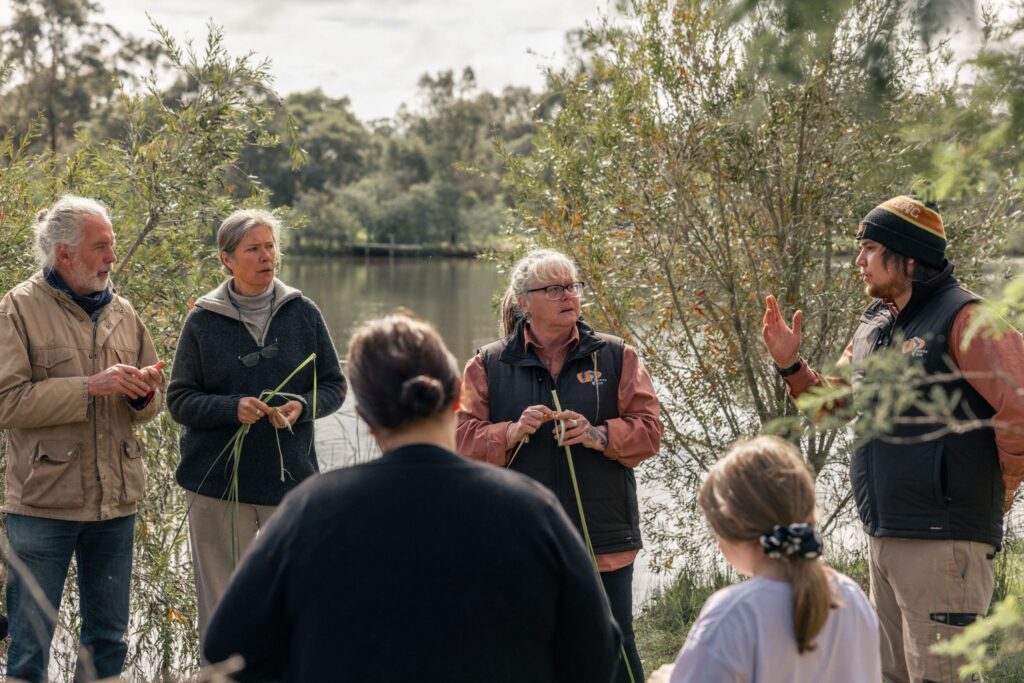
If you’ve been on a wawa biik experience, you would have had plenty of yarns. Yarning is more than a conversation or a story – it’s a deeply cultural way of learning, sharing and connecting. For thousands of generations the tradition of yarning has been practiced by our Taungurung Ancestors and First Nations Peoples across Australia. Today it is a big part of our culture– in sharing knowledge, story, experience, and building relationships.

Yarning is a way of connecting and purposefully sharing knowledge through narrative. It can include anecdotes, stories and experiences, plus if you’ve met any of our wawa biik guides – a good laugh. Yarns are typically non-linear and free flowing – so that means that topics and themes may seemingly go off on tangents, but these themes are often revisited, allowing for connections and learnings to surface as different parts of the yarn come together.

Yarning is just as much about sharing knowledge as it is for building strong relationships. Cultural protocols create a safe space for yarning between people – ‘active listening, mutual respect and building on what others have said rather than openly contradicting them’ (Yunkaporta 2019, 131) is incredibly important, enabling the flow to respect different points of view.

Aunt Jo on the importance of yarning on tour:

Our wawa biik experiences are built on dhumbak gadhaba (yarning together). We create a safe space for everyone to share and be part of the conversation. We acknowledge that we are all coming to biik (Country) from different places, experiences, understanding and knowledge and that’s ok. Our yarns are about sharing our culture, story and experience but this can only happen when we are there respecting each other, listening to each other, and to biik, our Country, so that we can walk together.

To keep learning about yarning see:

Atkinson, P, Baird, M & Adams, K 2021, ‘Are you really using Yarning research? Mapping Social and Family Yarning to Strengthen Yarning research quality’, AlterNative, 17 (2), 191 – 201.

Yunkaporta, T, 2019, Sand Talk: How Indigenous Thinking Can Save the World, The Text Publishing Company, Melbourne Australia

Jan 26th is not a date to celebrate! It is a day of mourning and a reminder of the strength & survival of First Nations culture, country and communities.
 
We know this time can be especially hard time for mob. If you’re finding it tough today, here are a few ways to take care of yourself over Jan 26th:

• Spend time with mob.
• Take a break from social media.
• Spend time on country.
• Reach out to an aunty or uncle for a yarn.
 
If you are an ally, here are a few meaningful ways you can show up for First Nations people:

• Work instead of taking the public holiday
• Attend a rally or First Nations event.
• Learn about First Nations culture & history.
• Donate to a first Nations charity.
 
Always was, always will be Aboriginal land. #invasionday #alwayswasalwayswillbe🖤💛❤️ #survivalday #notadatetocelebrate #blackanddeadly
Don’t miss out on our upcoming tours!! To book your tour today either head to our website or shoot us an email!
 
🖥️ wawabiik.com.au
💌 hello@wawabiik.com.au
📞 5784 1466
📍 Taungurung Country
Subscribe to our newsletter today! Stay informed about what’s new with wawa biik and be the first to hear of new experiences & events!

To subscribe tap the link in our bio or head to our website.

🖥️ wawabiik.com.au
Experience Taungurung culture & country with wawa biik. 

Led by first nations guides our experiences provide a safe, positive space for yarning, learning and experiencing the changes of biik (country) together.

To book your tour today, head to our website or shoot us an email!
 
🖥️ wawabiik.com.au
💌hello@wawabiik.com.au
📞 5784 1466
📍 Taungurung Country
Merry Christmas and Happy New Years everyone! 

We’re wishing you a restful holiday surrounded by loved ones!

#christmas #merrychristmas #merrychristmas❤️ #seasonholidays #holidayseason
This website and any content on this website are protected by the Copyright Act 1968 (Cth), and may also contain Indigenous Cultural and Intellectual Property (ICIP). All rights are reserved.
You may only deal with the content of this website with the prior written consent of TLaWC, the copyright owner and/or the Traditional Custodians of that ICIP, and with attribution. Contact communications@tlawc.com.au for enquiries about permitted reproductions. Visitors who book cultural experiences through this website must comply with the wawa biik Standard Booking Conditions, available here.