What is yarning?

November 27, 2023

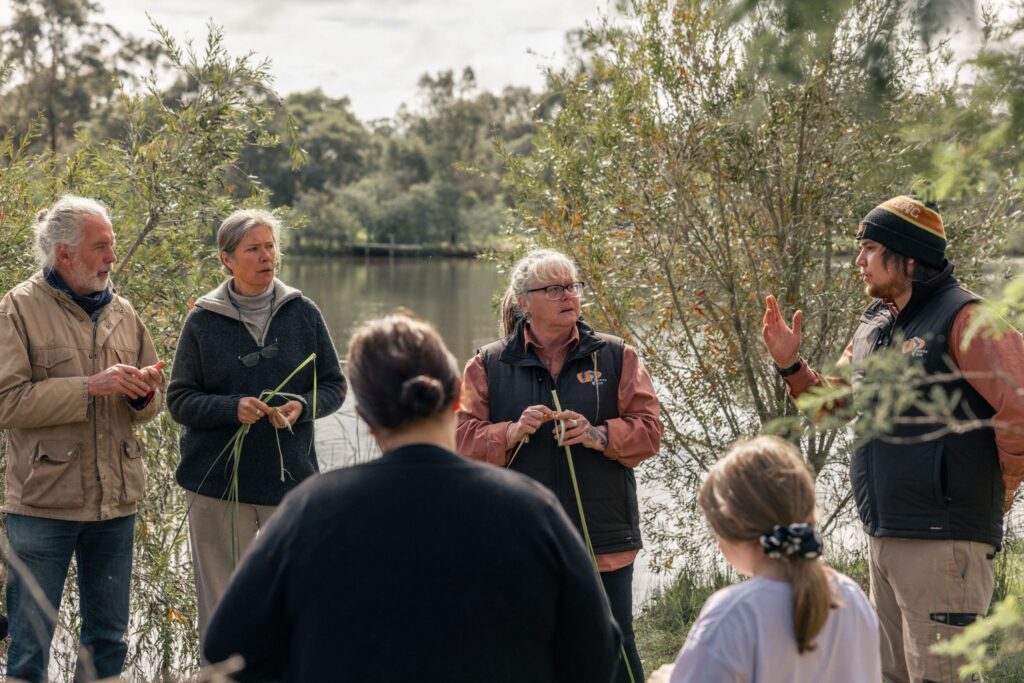
If you’ve been on a wawa biik experience, you would have had plenty of yarns. Yarning is more than a conversation or a story – it’s a deeply cultural way of learning, sharing and connecting. For thousands of generations the tradition of yarning has been practiced by our Taungurung Ancestors and First Nations Peoples across Australia. Today it is a big part of our culture– in sharing knowledge, story, experience, and building relationships.

Yarning is a way of connecting and purposefully sharing knowledge through narrative. It can include anecdotes, stories and experiences, plus if you’ve met any of our wawa biik guides – a good laugh. Yarns are typically non-linear and free flowing – so that means that topics and themes may seemingly go off on tangents, but these themes are often revisited, allowing for connections and learnings to surface as different parts of the yarn come together.

Yarning is just as much about sharing knowledge as it is for building strong relationships. Cultural protocols create a safe space for yarning between people – ‘active listening, mutual respect and building on what others have said rather than openly contradicting them’ (Yunkaporta 2019, 131) is incredibly important, enabling the flow to respect different points of view.

Aunt Jo on the importance of yarning on tour:

Our wawa biik experiences are built on dhumbak gadhaba (yarning together). We create a safe space for everyone to share and be part of the conversation. We acknowledge that we are all coming to biik (Country) from different places, experiences, understanding and knowledge and that’s ok. Our yarns are about sharing our culture, story and experience but this can only happen when we are there respecting each other, listening to each other, and to biik, our Country, so that we can walk together.

To keep learning about yarning see:

Atkinson, P, Baird, M & Adams, K 2021, ‘Are you really using Yarning research? Mapping Social and Family Yarning to Strengthen Yarning research quality’, AlterNative, 17 (2), 191 – 201.

Yunkaporta, T, 2019, Sand Talk: How Indigenous Thinking Can Save the World, The Text Publishing Company, Melbourne Australia

Today is International Women’s Day!

We’re taking this moment to honour the strength, resilience and excellence of deadly women across Taungurung community. Our women carry culture, guide our young ones, protect Country and hold stories that keep us grounded. Their work, both seen and unseen, shapes our communities.

Today we also recognise the achievements of women around the world who stand strong, lift others up and create change in every space they walk into.

To all the deadly women in our community and beyond: we see you, we appreciate you, and we celebrate you.

Happy International Women’s Day!
Subscribe to our newsletter today! Stay informed about what’s new with wawa biik and be the first to hear of experiences & events!

to subscribe tap the link in our bio or head to our website.

🖥️: wawabiik.com.au
A lovely day at Tahbilk with the Executive Leadership Team from Parks Victoria. 

Ngun Godjin to our guides Anne and Ben and for everyone that joined us on biik today! 

#taungurungbiik #tahbilktahbilk #culturaltours #culturalwalk #wetlandscruise
Sadly, Uncle Shane leaves wawa biik this week. 

Uncle Shane has played an integral role in shaping wawa biik through his deep knowledge of Culture and Country. He has led tours with guests and community members with generosity, wisdom and a good yarn every time. 

His leadership, passion and knowledge have been central to wawa biik’s success, with many visitors praising his guidance and cultural expertise. 

We honour his legacy, his commitment to the Taungurung Nation, and the impact he has made on everyone he has met. wawa biik has been only one part of his enormous contribution to the Taungurung Land and Waters Council during his 10-year tenure. 

Please join us farewelling Uncle Shane and wishing him all the best as he takes on another exciting opportunity to continue pursuing his passion for Country. 

#culturalelder #Taungurungbiik #culturaltourism #culturaleducation
This website and any content on this website are protected by the Copyright Act 1968 (Cth), and may also contain Indigenous Cultural and Intellectual Property (ICIP). All rights are reserved.
You may only deal with the content of this website with the prior written consent of TLaWC, the copyright owner and/or the Traditional Custodians of that ICIP, and with attribution. Contact communications@tlawc.com.au for enquiries about permitted reproductions. Visitors who book cultural experiences through this website must comply with the wawa biik Standard Booking Conditions, available here.