The journey of Truth-telling and Treaty
July 8, 2025
The Yoorrook Justice Commission published its final landmark report last week — a powerful and definitive account of Victoria’s history since colonisation, as told by First Peoples. This report has been an important step for truth-telling and healing that will pave the way for Treaty negotiations in Victoria. The First Peoples’ Assembly of Victoria is the representative body that will negotiate statewide treaties with the State Government on behalf of all Aboriginal and Torres Strait Islander Victorians. Kaley Nicholson is the appointed Taungurung Representative who will champion the interests of the Taungurung Nation in the statewide treaty making process.
Kaley says “This role is a great responsibility, one I carry with pride, grounded in culture and community. Treaty is a chance to pursue justice and restore the rights of our people. I’m committed to ensuring the voices, needs and aspirations of the Taungurung Nation are heard, respected and reflected in this process“. We yarn with Kaley to find out about Treaty for Victoria and what you can do as an ally to support the journey.
1. What actually is a Treaty?
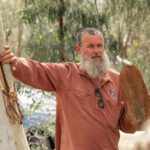
A Treaty is an agreement between two Nations which sets out how the two groups will relate to each other, particularly in order to share land and resources: the rules, roles, rights and responsibilities. In Victoria right now, Treaty-making is an opportunity to acknowledge the history between First Peoples and colonisers and to build a fairer and stronger future together. After more than 200 years of Europeans calling Victoria home, this is a really exciting opportunity to address hurt and feelings of guilt, to develop our society in ways that make this a great place to live for all citizens and establish pride in our joint identity. Image of Kaley Nicholson (image credit: Leroy Miller)
2. Are you able to provide some global context to Treaty negotiations in other countries and their impact for First Nations communities?
Australia is one of the only Commonwealth countries that doesn’t have a Treaty with its First Peoples. In other countries, including New Zealand, the USA and Canada, treaties were negotiated early in the relationship between colonisers and First Peoples. Although each is different, and with the perspective of hindsight they can be judged as being more or less effective, they each enable a mechanism for conversations, the building of understanding and conflict resolution between the two groups.
3. Why doesn’t Australia have a Treaty with our First Peoples?
There isn’t one simple answer to this question. First, it’s important to remember that when Europeans arrived on this continent it wasn’t one Country but occupied by more than three hundred individual sovereign Nations. If we could go back in time, the ideal would have been for the colonisers to sit down and negotiate entry to land and access to resources with each of those Nations individually, and there would be a patchwork of interrelated Treaties in operation today. Whether or not a Treaty should be negotiated with Aboriginal and Torres Strait Islanders was a topic of discussion between early explorers, governors to Australia and the Crown. Ultimately, the decision to rely on the international law idea of terra nullius — that the land belonged to nobody — was made. As a result, First Peoples, who of course knew their sovereign rights and ownership of their land, were forced into conflict with the colonisers. We have been asserting and fighting for our communities, culture and Country ever since, through direct warfare, protest and advocacy.
4. What is the difference between the Taungurung Treaty and the Statewide Treaty?
Since 2016, work has been underway to set up everything needed to negotiate Treaties in Victoria. This includes establishing an organisation to represent First Peoples from across Victoria (called the First Peoples’ Assembly of Victoria), the Treaty-making rules, and the organisation that will independently adjudicate Treaty-making to ensure fairness (called the Treaty Authority). The State Government and the First Peoples’ Assembly of Victoria came together to write the rules for Treaty-making. When they did this, they realised there were significant issues to negotiate in Treaties that affect all Victorian Aboriginal people — things like reforms to the justice system, education and child protection. It didn’t make sense for these common issues to be negotiated over and over again by separate First Nations. So, the Treaty rules provide an avenue for statewide Treaties to be negotiated to address these shared issues. However, there is also an understanding that each of the Traditional Owner Groups within the State of Victoria are their own sovereign Nations, with rights, responsibilities, governing rules, structures, and cultural protocols for their own Country. Issues that relate specifically to those Nations and their Country can only be negotiated directly between them and the State. So, the Treaty rules provide a second avenue for individual Traditional Owner Nations to negotiate Treaties for their own Country. These two Treaty types will sit side by side, with neither superior to the other. Treaties, whether statewide or relating to an individual First Nation, will be negotiated, extended and updated over time — so it’s not just a single Treaty that’s signed and forgotten, but a living document that grows and responds to needs over time.
5. Could you explain how the Statewide Treaty process works, the timeline and how all the First Nations communities across Victoria are working together to achieve this?
Negotiations for the first Statewide Treaty are currently underway and we expect to have it signed this year! Statewide Treaties are negotiated by the First Peoples’ Assembly of Victoria on behalf of all Aboriginal Victorians. This is an elected representative body, with Assembly Members voted for by the communities they represent — either the region they come from, or for their specific mob. I am the reserved seat holder for the Taungurung Nation, which means that my mob, the Taungurung, voted for me to represent them specifically. The Assembly has undertaken a huge amount of work over the last few years to bring together Aboriginal people from across Victoria and determine what our priorities are for statewide Treaty-making. From this, they’ve developed a negotiation brief to guide them in the first round of Treaty talks, with a focus on strengthening the Assembly so it can drive positive structural change to improve the lives of Aboriginal and Torres Strait Islander people. Once signed, the first Treaty will deliver some direct improvements to the relationship between First Peoples and the State and will set the framework for future negotiations.
6. How might Treaty benefit the Taungurung Nation?
Statewide Treaties will benefit all Victorian First Peoples by enabling them to make decisions relating to their communities and by removing systemic barriers that disproportionately and negatively impact on their communities. If the Taungurung Nation decides to negotiate Nation-specific Treaties, in one sense the benefits are limitless! The Treaty rules say that “nothing is off the table”, which means the Taungurung community can come together and discuss our own priorities for our own Treaties. Benefits might include better ability to access and make decisions relating to our Country and greater recognition as the First Peoples across our Country.
7. What will statewide Treaty mean for all Victorians?
Treaty is about re-establishing rights for First Peoples, but in doing so it’s actually fundamentally about all Victorians. Treaty is an agreement between two Nations about how they will share land, resources and decision-making, and show respect to each other’s cultures, rights and needs. A Statewide Treaty in Victoria is about resetting the very foundation of the unsanctioned occupation of this land — redressing the injustices that have permeated since the first arrival of Europeans. For the broader community, this will likely start with little things — like seeking a better understanding of the Country you live on, that Country’s Traditional Owners and their priorities, Community and Culture; feeling more confident to express Acknowledgement of Country; and engaging in conversations about our shared past and future. Over time, we hope it grows into a much deeper relationship and reciprocity between First Peoples and the wider community and the shared Country they live, visit and work on.
8. What are the key messages about Treaty that allies can help communicate through their networks to dispel any concerns or misinformation about Treaty?
Although a lot of work has been happening in Victoria around Treaty over the last few years, we are still at the start of this journey! It’s new, and it’s okay to feel unsure about what it is and what it will mean for us all. Importantly, these are things that we can work out together. An important message is that Treaty is not just for First Peoples, it is an agreement between two groups. Treaty is for everyone — and by getting on board, we can make sure it brings real benefits for all Victorians. It provides a more equitable sharing of rights, decision-making and resources, this doesn’t mean one group will end up with less — Treaty is about making the system better for everyone. Treaty work won’t happen overnight — it will be negotiated in stages over years and decades, and it will provide benefits now and for generations to come.
9. How can people stay informed and support Taungurung and other First Peoples during this Treaty process?
Please sign up to the First Peoples’ Assembly of Victoria and the Taungurung Land and Waters Council newsletters to receive news about Treaty straight to your inbox! There's heaps of great information out there about Treaty and its benefits. A great place to start is the First Peoples’ Assembly of Victoria website and the final report of the Yoorrook Justice Commission, which was recently released. Be confident to speak up for Treaty within your own communities – share the knowledge you’ve gained and encourage others to do the same. Do keep an eye out and attend the Treaty or other First Peoples forums – there are plenty of opportunities in NAIDOC Week and beyond to show up to events and celebrations and be part of this momentous opportunity!